
Imaginary Friends, Alter Egos & Bad Influences

Imaginary Friends, Alter Egos & Bad Influences
I've always been drawn to colourful characters. In films, it's the character that makes you lean in, not the location, not the lighting, not even the story. The character. So when I started exploring AI image generation, it was almost inevitable that I'd end up here: building a cast of creatures, misfits, and unlikely companions that couldn't exist anywhere else.
This collection grew out of curiosity more than anything else. I wanted to understand what these new AI tools could actually do, not just in a technical sense, but more so in a creative one. Could I use AI the way I use a camera? Could I direct it, shape it, push it toward something that felt intentional rather than randomly generated? The answer, I found, was yes, but only if you approached it like a filmmaker rather than a day tripper.
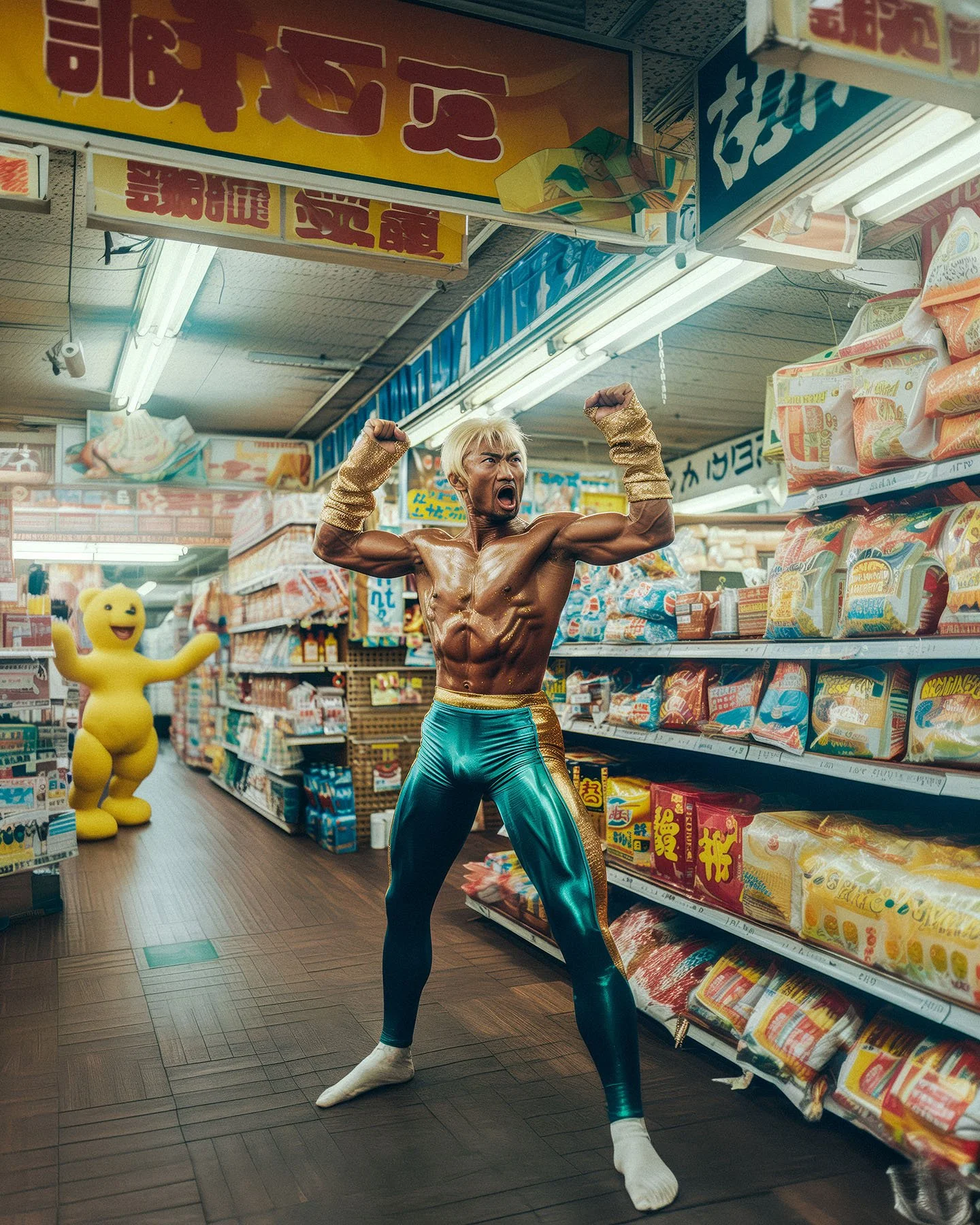
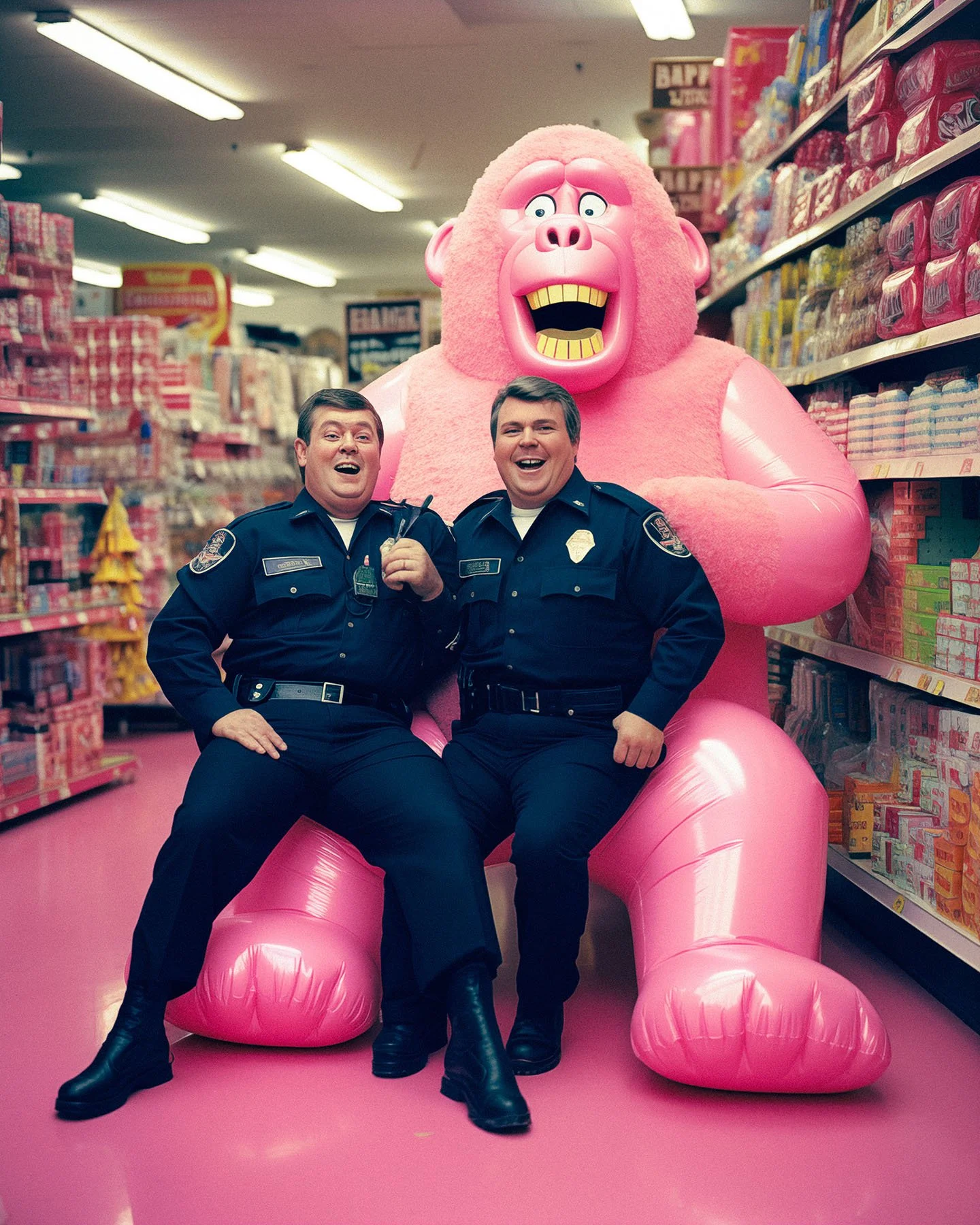
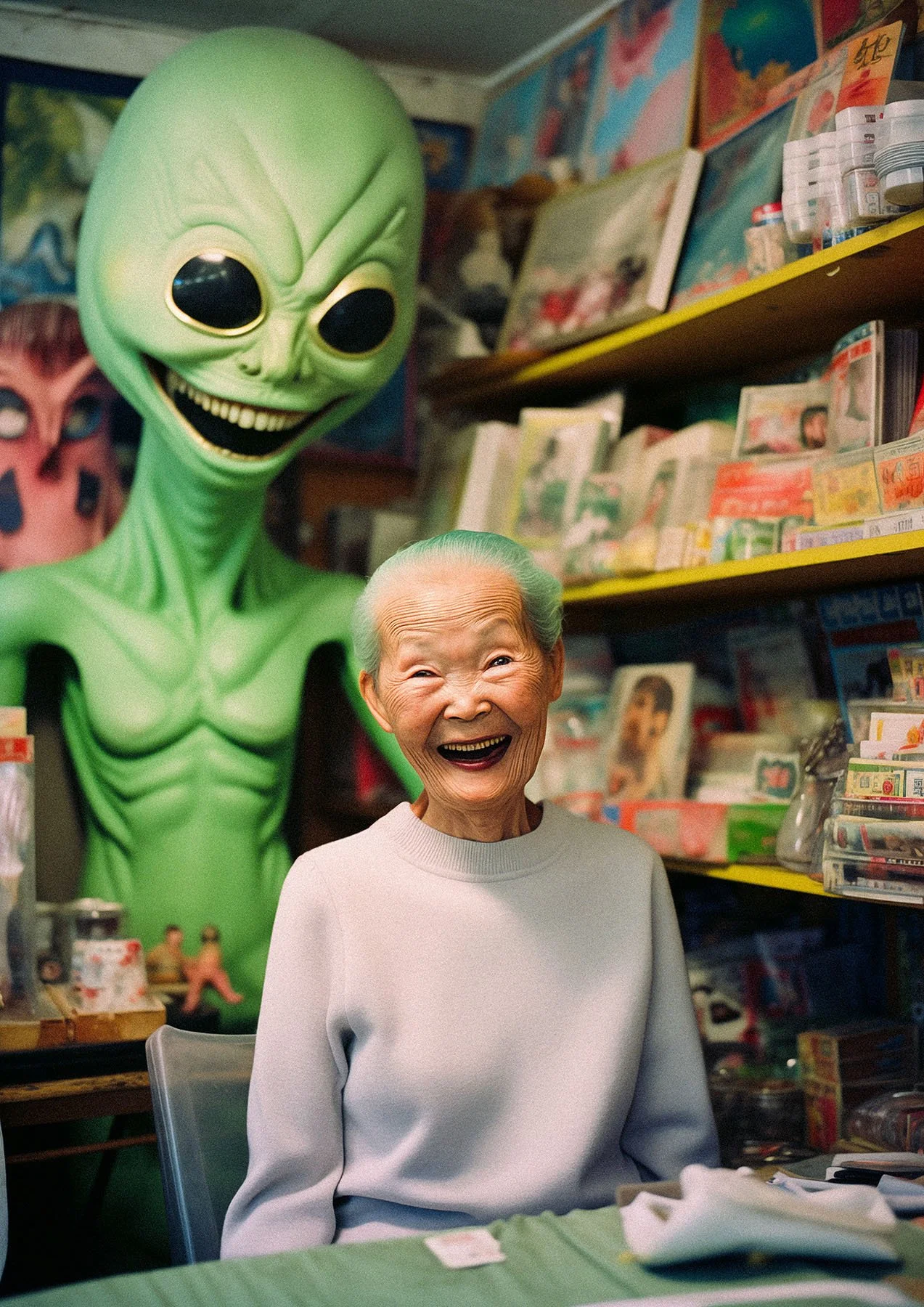
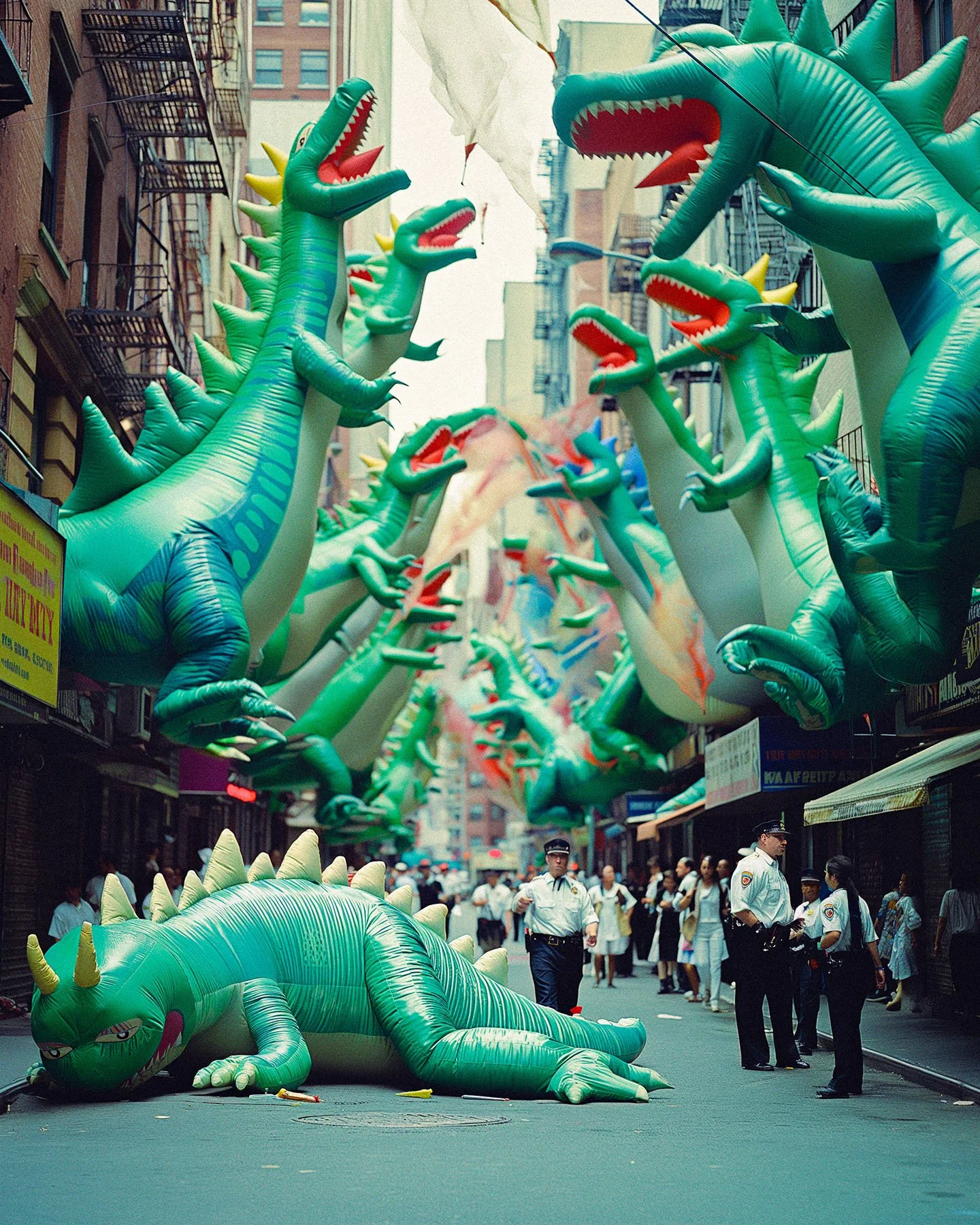
The theme of imaginary friends, alter egos, and bad influences wasn't something I planned from the start. It emerged. A laughing alien here, Godzilla with a pint there, a pink gorilla keeping unlikely company with two ‘very serious’ policemen. What I noticed was that the images I kept coming back to, the ones that felt alive, all shared something. They had a relationship at their centre. A tension. A joke only the subjects were in on. That felt worth exploring.
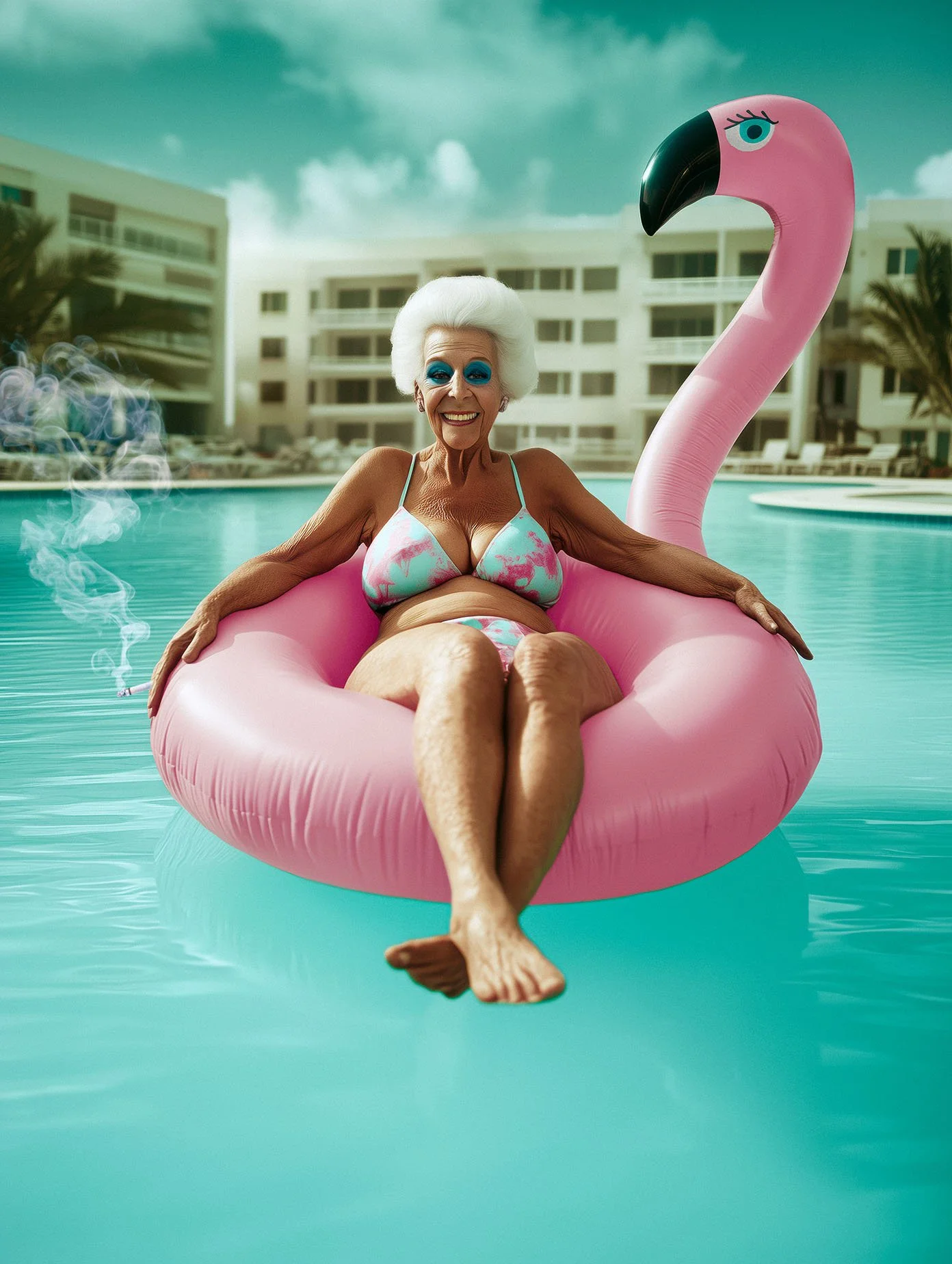
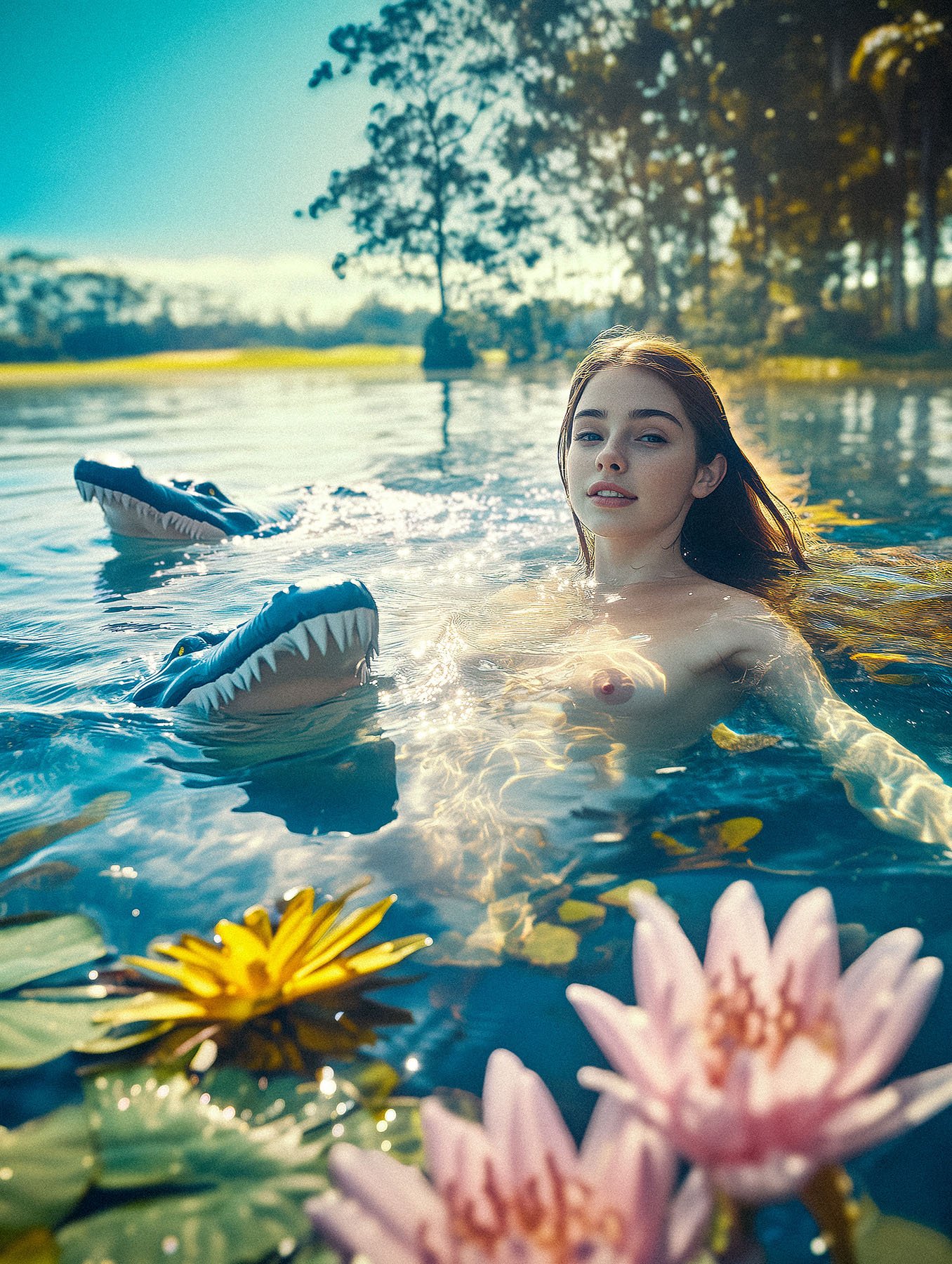
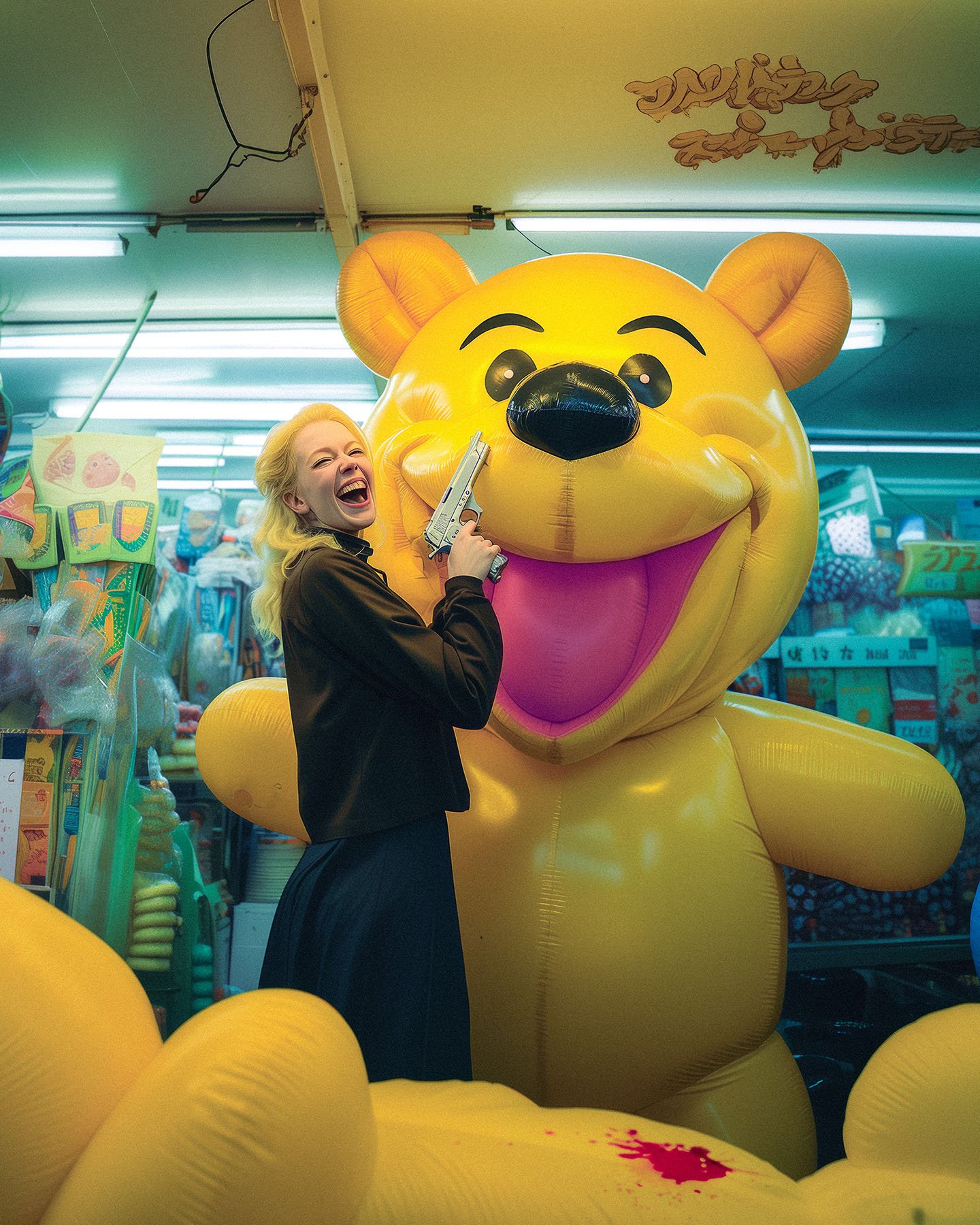
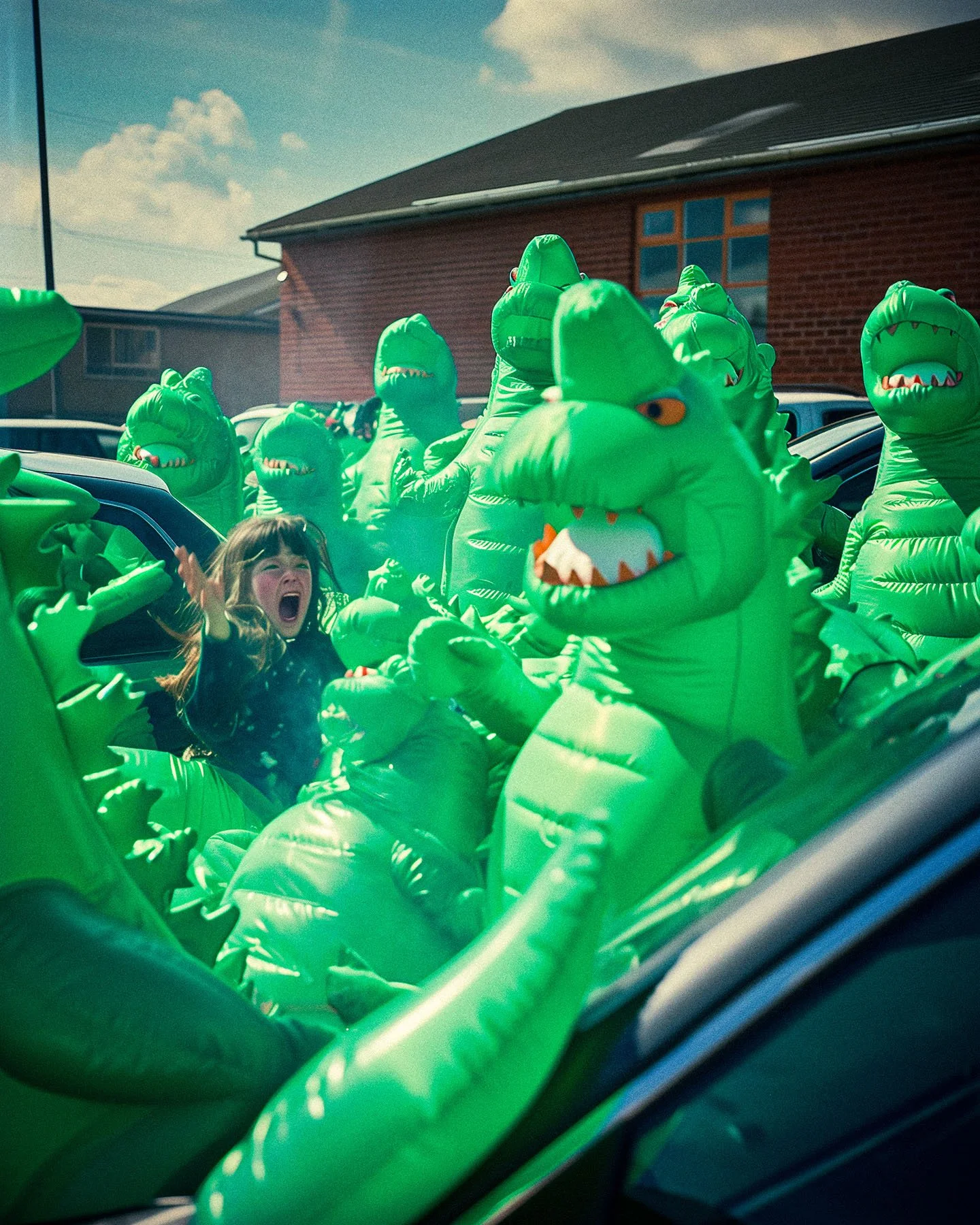
There's something about plastic creatures and inflatable beach toys that I find genuinely interesting as subject matter. They're objects designed to bring comfort or play, but when rendered as portraits with photographic seriousness, they take on a strange kind of weight. They become characters, and in a world that's increasingly mediated through screens and filters and algorithmically curated realities, there's something quietly provocative about presenting the obviously artificial with absolute photographic conviction.
That tension, between the real and the constructed, the serious and the absurd, is something I think about a lot in my wider work too. We're living through a moment where the visual landscape is shifting faster than most people realise. AI generated imagery is everywhere, whether audiences know it or not. The question that interests me isn't whether AI can be used to make something beautiful. It clearly can. The question is whether it can be used to make something that means something. Whether the person behind the prompt has a point of view, a voice, an instinct for what makes an image land.
For me, that instinct comes from years of being behind the camera, shooting commercials, directing live action video, obsessing over light and composition and that all decisive moment. That background doesn't become irrelevant when you move into AI. If anything, it becomes more important. Anyone can type a prompt. Far fewer people know how to deliberately shape a result, how to refine it, how to push it further, how to recognise when something is working and when it isn't. That's craft. And craft doesn't change just because the tools do.
This collection is, in some ways, a sketchbook. A record of me learning a new language while staying fluent in the one I already know. The images are playful, sometimes absurd, occasionally a little unsettling. But they're all portraits, in the truest sense. They're all about ‘something’ looking back at you.
Ed Salkeld, 2024 to 2025